Starting price
$29/mo
Budget tier
Budget-friendly
Complexity
Beginner-friendly
Integrations
20+
Best for
Agencies and B2B teams that prioritize inbox deliverability.
Overview
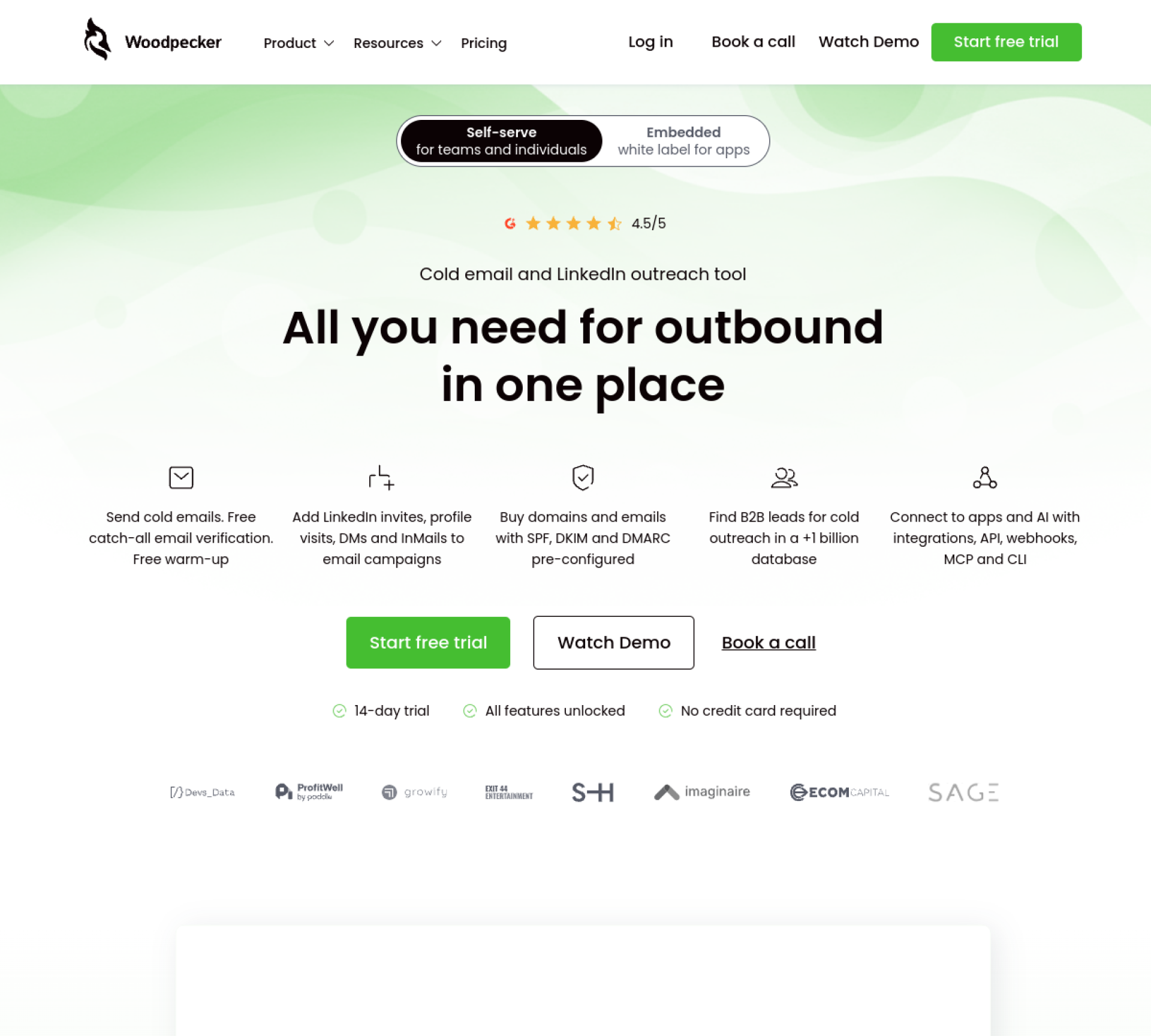
Woodpecker is a Polish cold-email platform known for deliverability: built-in warm-up, sending limits, and bounce protection that keep campaigns out of spam. It is a steady choice for agencies and B2B teams in Europe.
Founded in 2015 and based in Wrocław, Poland, Woodpecker competes in the sales engagement category. It is easy to get started with, and it sits at the affordable end of the market ($29/mo). In practice, Woodpecker is best for agencies and B2B teams that prioritize inbox deliverability.
In day-to-day use, a sales engagement tool is where reps actually run their outbound. They load prospects into multistep sequences, let the system schedule emails and surface call and LinkedIn tasks, and work a single prioritized to-do list each morning. Managers use it to standardize the motion so every rep follows the playbook that books meetings.
Key features
Here is what Woodpecker brings to the table, and what each capability means in practice.
Multichannel sequences
Runs coordinated sequences across email, phone, and LinkedIn so a single prospect is touched consistently across channels. Multichannel cadences reliably outperform email-only outreach, because few buyers respond to the first message on the first channel.
Automated email sequencing
Automates multi-step email cadences with delays, conditions, and automatic stops on reply. It keeps follow-up consistent at volume, which is where most outbound actually falls down, reps simply forget to send touch three or four.
A/B testing
A/B tests subject lines, copy, and send times to find the messaging that actually books meetings. Over hundreds of sends, small lifts in reply rate compound into a meaningfully fuller pipeline.
Deliverability / warm-up
Includes inbox warm-up, sending limits, and domain health tools that keep emails landing in the primary inbox. Deliverability is the silent killer of cold email, the best-written sequence is worthless if it never reaches the prospect.
Engagement analytics
Tracks opens, clicks, replies, and meetings booked at the step and template level. That visibility tells you exactly which messages and which steps in a sequence are doing the work, so you can cut what isn't.
API & webhooks
An API and webhooks let teams automate workflows and pipe data into their own systems and dashboards. For RevOps teams, this is what makes the tool a building block rather than a silo.
Who it's for
Woodpecker is built for solo founders and individual reps, startups and mid-market teams. It is a particularly strong fit for agencies and B2B teams that prioritize inbox deliverability, and reps will find it easy to get started with.
It is less of a fit in a few cases. It may be more than solo users with very basic needs require, and if email-first, lighter on other channels is a dealbreaker for you, it is worth weighing against the alternatives before committing.
Typical users include SDR and BDR teams running outbound at volume, account executives managing follow-up across many open deals, and sales leaders enforcing a consistent cadence across the team.
Integrations & ecosystem
Woodpecker connects with around 20+ tools, including HubSpot, Pipedrive, Slack, Zapier and Calendly. That matters because a sales tool is only as useful as the rest of your stack: the tighter it plugs into your CRM and workflow, the less manual data entry your reps do and the cleaner your reporting stays.
An open API and webhooks mean Woodpecker can also be wired into custom workflows, internal dashboards, and the rest of your data stack, which is what RevOps teams look for when they want a tool to act as a building block rather than a silo.
Pricing & value
Woodpecker sits at the affordable end of the market. From ~$29/mo by contacts; strong deliverability tooling. The value case is strongest for the teams it is built for: when that is you, the time saved and meetings booked tend to outweigh the cost. If it is not, a lighter tool may serve you just as well for less. As always, the sticker price is only part of the story: weigh onboarding time, the tier your team will realistically land on, and any add-ons before comparing it against the alternatives.
Strengths & limitations
On the strengths side, Woodpecker stands out for a few reasons: strong deliverability and warm-up features; agency-friendly multi-inbox management; and reliable, focused cold-email workflow.
The trade-offs are worth knowing before you commit: email-first, lighter on other channels; uI feels utilitarian; and fewer native CRM integrations. None of these are necessarily dealbreakers, but they are the points to pressure-test during a trial.
The bottom line
Woodpecker delivers cold email with deliverability focus, and it earns its place across solo founders and individual reps, startups and mid-market teams. The standout reasons to pick it are clear, strong deliverability and warm-up features chief among them, while the main thing to weigh is that email-first, lighter on other channels. If that trade-off fits your situation, Woodpecker is well worth a trial.
Pros & cons at a glance
Pros
- Strong deliverability and warm-up features
- Agency-friendly multi-inbox management
- Reliable, focused cold-email workflow
Cons
- Email-first, lighter on other channels
- UI feels utilitarian
- Fewer native CRM integrations
Features at a glance
Pricing
$29/mo
From ~$29/mo by contacts; strong deliverability tooling
Pricing verified against the vendor's site in 2026.
Frequently asked questions
How much does Woodpecker cost? +
Woodpecker starts at $29/mo. From ~$29/mo by contacts; strong deliverability tooling.
Does Woodpecker have a free plan? +
Woodpecker does not offer a permanent free plan, though its pricing (from ~$29/mo by contacts; strong deliverability tooling) often includes a trial to evaluate it first.
What is Woodpecker best for? +
Woodpecker is best for agencies and B2B teams that prioritize inbox deliverability. It is a particularly strong fit for solo founders and individual reps, startups and mid-market teams, and reps will find it beginner-friendly to adopt.
What does Woodpecker integrate with? +
Woodpecker integrates with around 20+ tools, including HubSpot, Pipedrive, Slack, Zapier and Calendly.
What are the best Woodpecker alternatives? +
Leading alternatives to Woodpecker include Instantly, La Growth Machine and Smartlead. You can see the full list, compared side by side, on our Woodpecker alternatives page. See alternatives →
Similar tools
Woodpecker in our articles
Guides and comparisons on TheSharkStack that feature Woodpecker.